

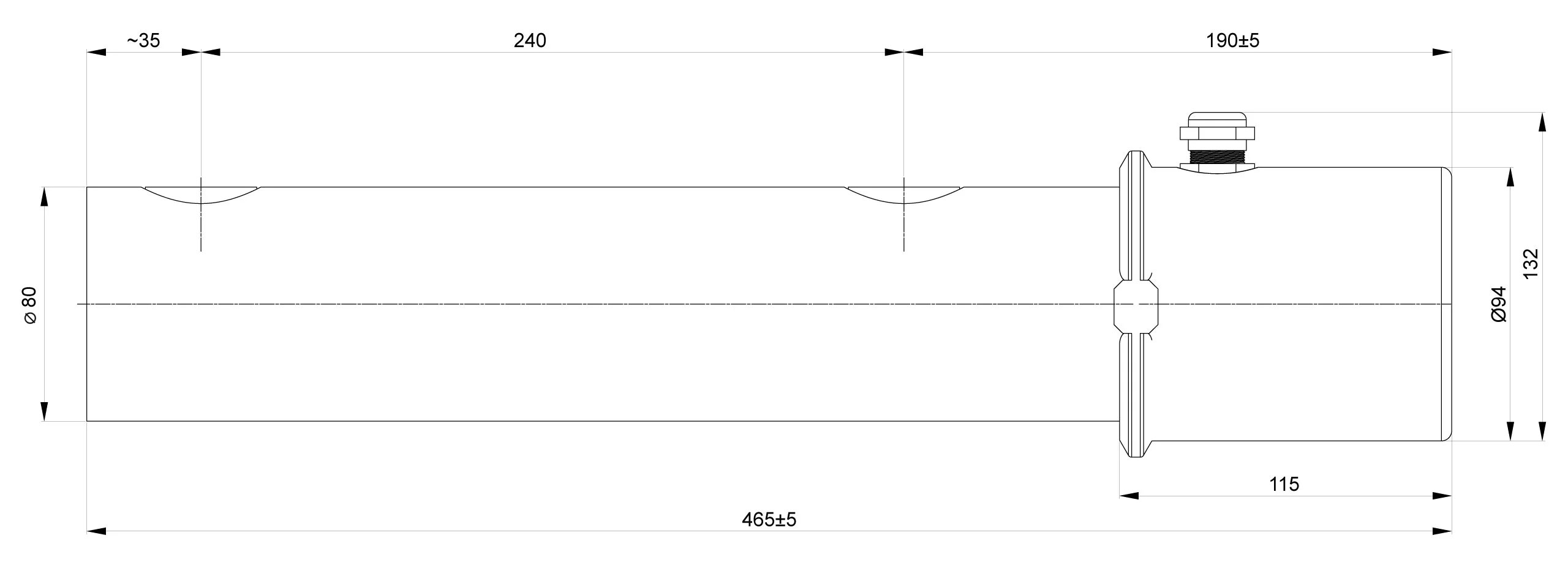
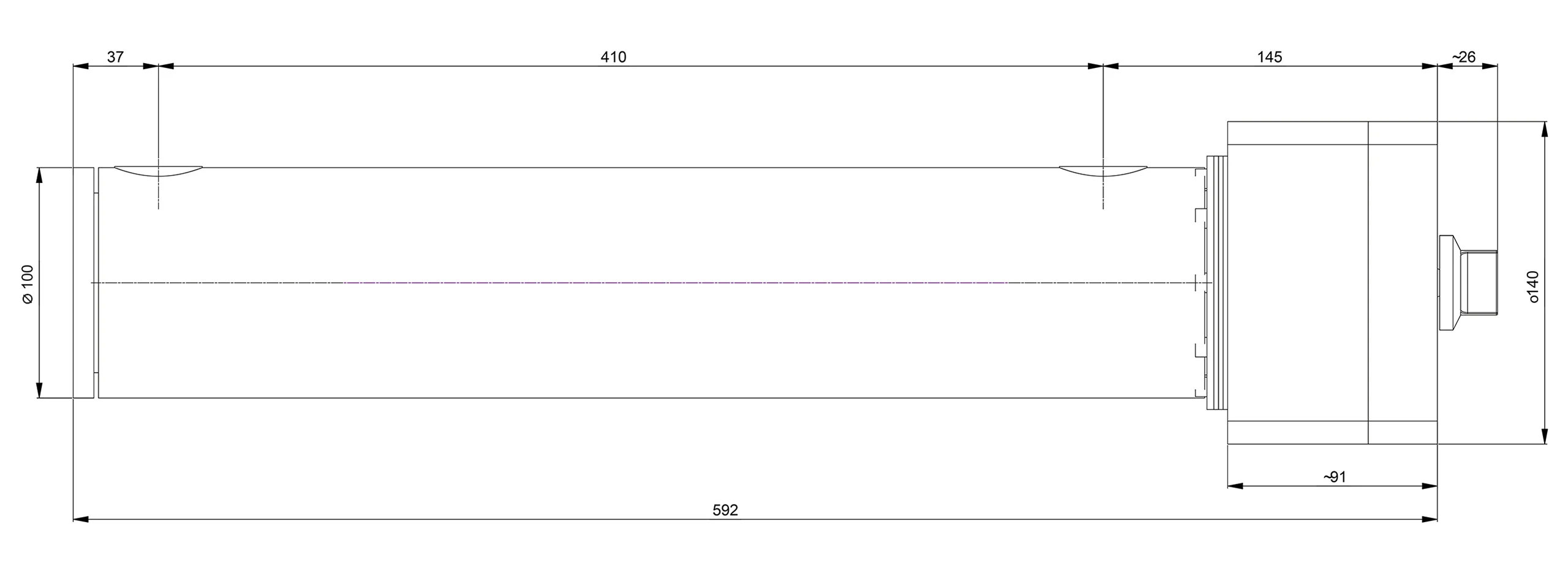
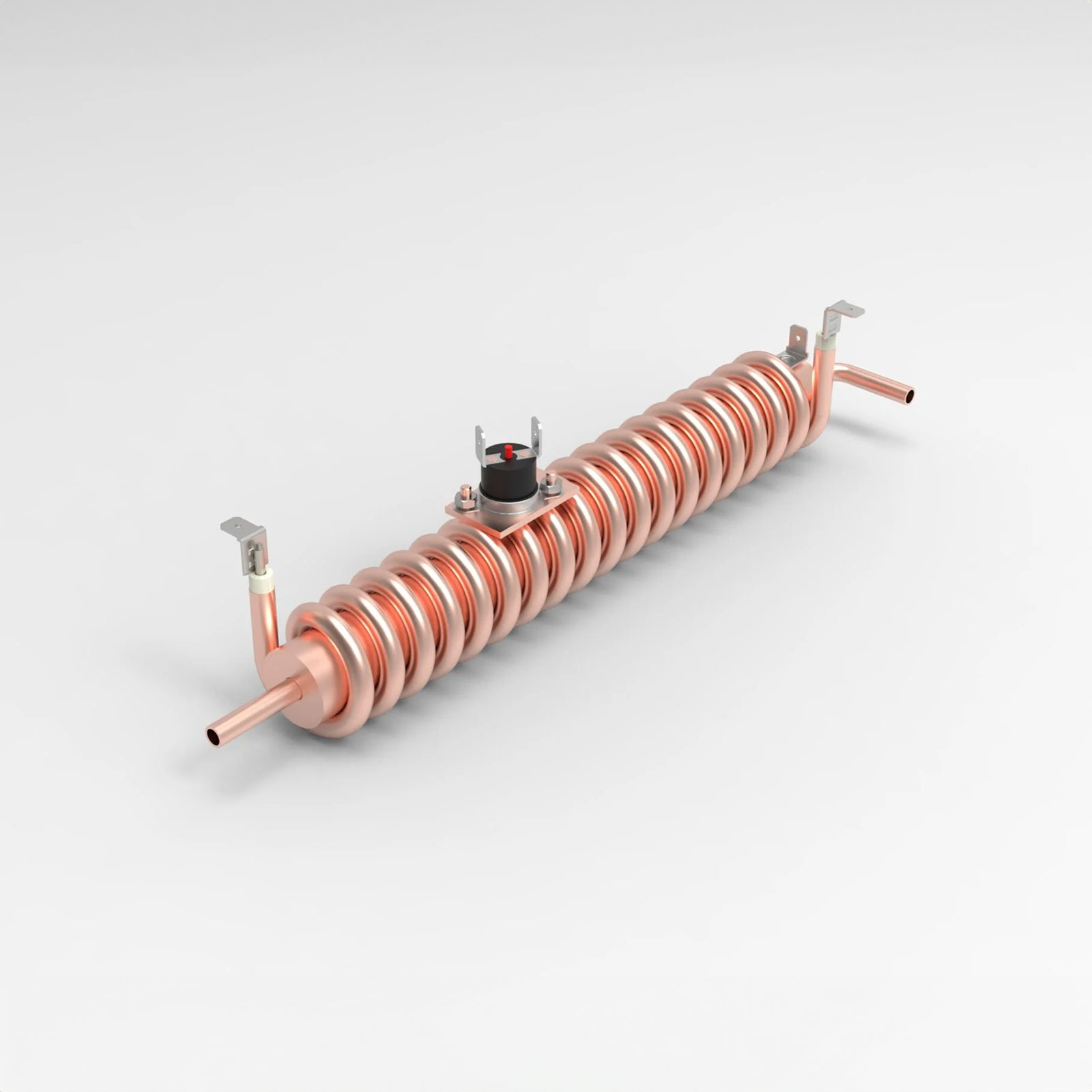
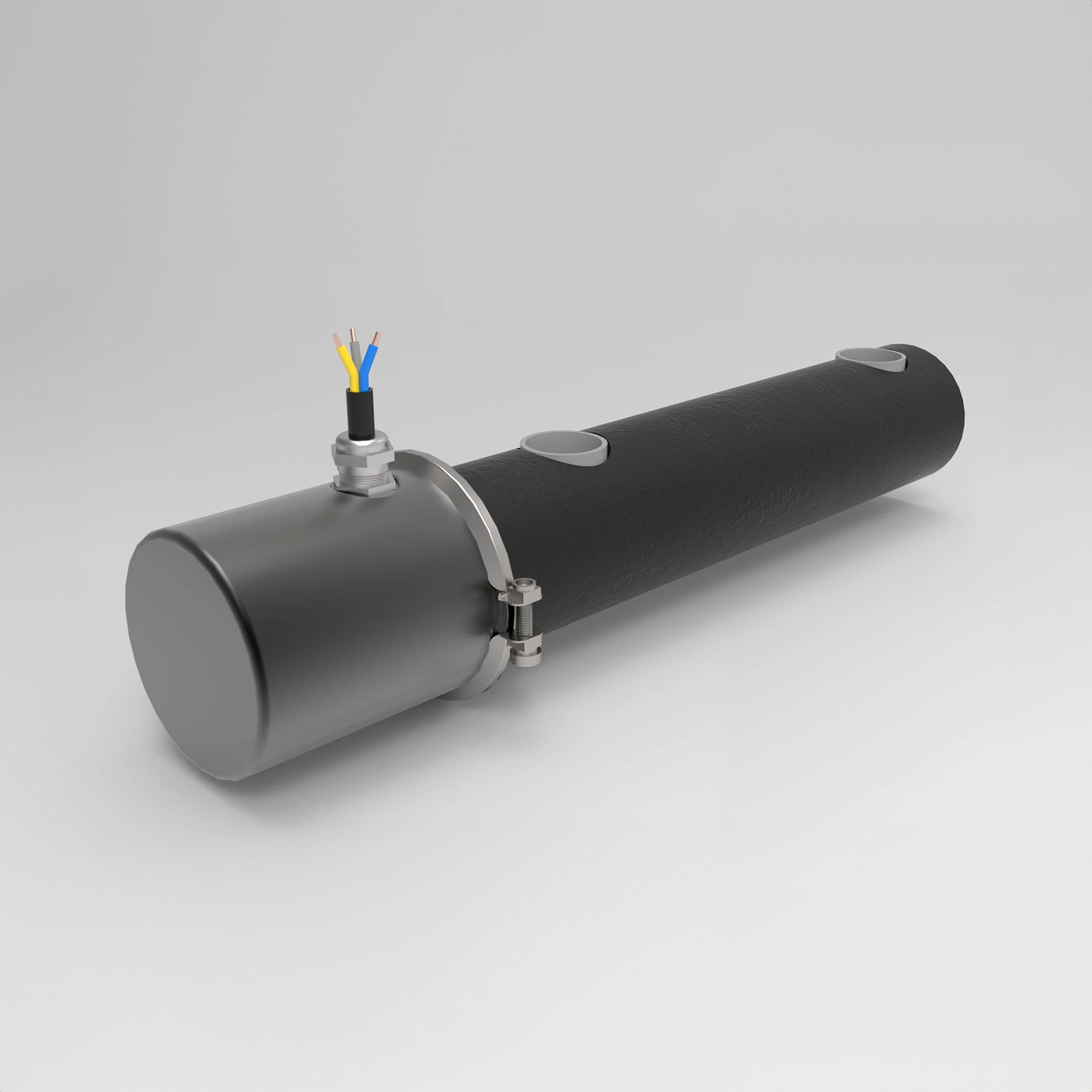
Dimension drawing of instantaneous water heater
Version A: 289-004XXX
Version B: 289-007200
| Item number | Power | suspense | connections | distance | variant | special feature |
|---|---|---|---|---|---|---|
| 289-004503 | 3000 | 230 | Rp1 | 240 | A | |
| 289-004511 | 3000 | 400 | Rp1 | 240 | A | |
| 289-004611 | 6000 | 400 | Rp1 | 240 | A | |
| 289-007200 | 1000 - 9000 | 230/400 | Rp1 | 410 | B | Switchable |
All flow heaters are custom-made and manufactured precisely according to our customers' technical specifications.
Flow heaters & instantaneous water heaters for industrial and commercial applications
Flow heaters heat media indirectly without it coming into contact with the actual heating element. This design is suitable for sensitive applications such as dialysis machines or drinking water treatment systems. The thermally separated design prevents contamination and ensures stable, controlled heat input. Since all heating components operate separately from the medium, flow heaters achieve a long service life and remain reliable even during continuous operation. They are a robust solution for processes in which purity and operational safety are crucial.We manufacture flow heaters exclusively for industrial and commercial applications. We do not supply instantaneous water heaters for private use.
Flow heaters for specific applications
Are you looking for a flow heater for a specific application?
Instantaneous water heaters work with direct heating. The medium comes into direct contact with the heating element. This ensures high efficiency and fast heat transfer. Instantaneous water heaters are suitable as supplementary heating and are often used in heating systems or in geothermal applications as switchable support.
Flow heaters, on the other hand, work indirectly. The medium remains separate from the heating element. This design is more durable and suitable for sensitive media that do not allow direct contact. These include applications in medical technology such as dialysis, drinking water treatment, or supplementary systems in heat pumps and other technical equipment.
The two systems differ significantly in terms of their design and area of application. Direct means maximum efficiency. Indirect means maximum safety and a long service life.
Which media are suitable for indirect heating?
What are the minimum and maximum flow rates that can be achieved in a technically feasible manner?
The achievable flow rates depend on the specific design. Very low volume flows are just as possible as high throughput rates, as long as the heat-emitting surface is designed appropriately.
What temperature stability can be achieved with highly fluctuating flow rates?
With suitable sensor technology and control technology, constant temperatures can be ensured even with varying flow rates. The control deviation remains low with correct design.
Can flow heaters be integrated into existing systems without major modifications?
What sensor technology can be integrated for temperature and flow monitoring?
Temperature sensors such as Pt100 can be permanently installed and connected directly to the control system.
What testing and documentation requirements can be met for medical or sanitary applications?
Customer- and industry-specific tests are carried out, such as pressure and leak tests.
Frequently asked questions about our instantaneous water heaters
- Flow heaters are used wherever media need to be heated indirectly and reliably. They are suitable for sensitive applications and are always custom-made. The following selection answers typical questions from practice that go beyond general product information.
Use Cases » Flow Heaters

In commercial kitchens in hotels, cafeterias, and restaurants, efficient and reliable heat is a crucial factor for smooth operations. Whether for preparing food, keeping dishes warm, or cleaning cooking equipment—tubular heating elements are used wherever heat must be precisely controlled.

Precise heat, maximum hygiene, reliable performance: tubular heating elements for medical technology offer exact temperature control, germ-free processes, and energy efficiency—indispensable for sterilization, laboratories, and medical devices.